
The Smart Investor’s Guide to Safe and Profitable Investing
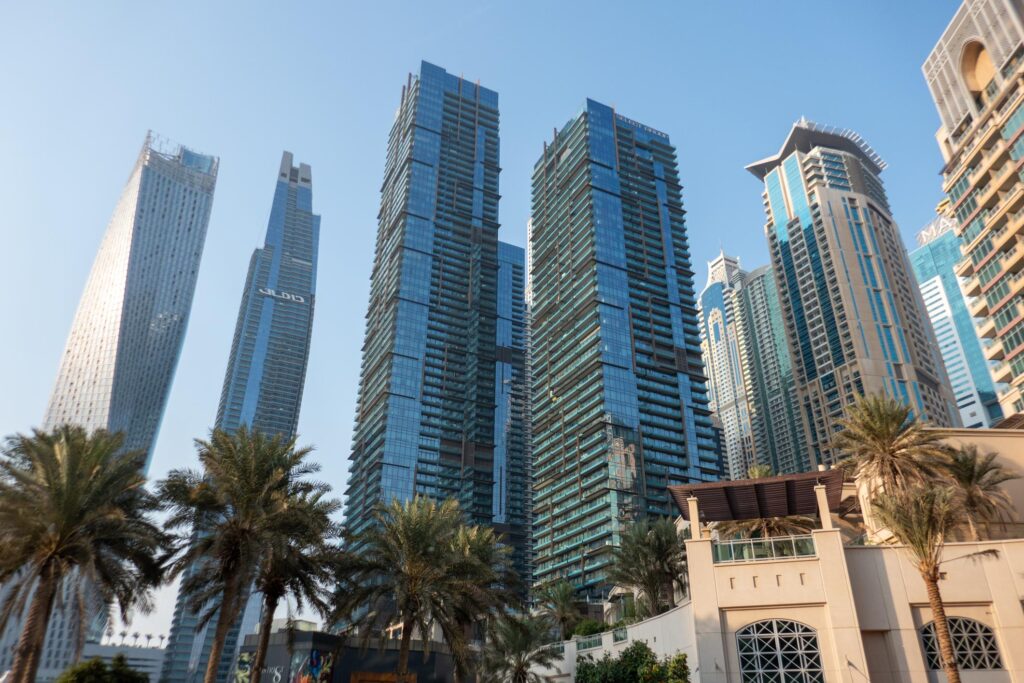

Dubai is one of the world’s strongest destinations for real estate investment—not only because of rapid urban growth and luxury developments, but also thanks to a competitive tax environment that gives investors exceptional advantages compared to many global markets such as Europe and the UK.
If you are considering buying a property in Dubai for residence, leasing, or resale, here is the complete guide to understanding the reality of property taxes in the emirate.
First: Are there property taxes in Dubai?
The short answer: There are no annual property taxes for individuals.
Unlike many countries, Dubai does not impose:
- ❌ An annual tax on property ownership
- ❌ Income tax on rental income for individuals
- ❌ Capital gains tax when individuals sell property
This is a fundamental advantage, meaning net investment returns are higher compared to markets where significant tax percentages are deducted annually.
Second: Exemption from rental income tax
If you own a property in Dubai in your personal capacity and rent it out:
✅ No income tax is imposed on rent
✅ You keep the full net return (after expenses)
✅ You do not need to file a personal tax return for rental income
Illustrative example:
If your annual rental income is AED 80,000, you keep the full amount with no income tax deduction.
This makes rental investment in Dubai one of the most attractive systems globally.
Third: Exemption when selling property
One of the most notable advantages of Dubai’s real estate market:
- There is no capital gains tax for individuals
- You can resell the property and make a profit without a direct government tax
- The only essential fees are the property transfer fees
This is what makes short- and medium-term investing (flipping or resale) a highly attractive option.
Fourth: Fees you should know (not taxes)
Despite the absence of direct taxes, there are some regulatory fees in the real estate market:
1️⃣ Property transfer fee
- Approximately 4% of the property value
- Paid to the Dubai Land Department
2️⃣ Maintenance and service charges
- Paid annually to the building or community management
- They vary depending on the project and the developer
3️⃣ Value Added Tax (VAT)
- At 5% on certain real estate services
- It is not usually applied to the sale of ready residential property to individuals
⚠️ It is important to distinguish between regulatory fees and taxes on income or profits. The former are paid once or in exchange for services, while the latter are imposed as a percentage of profits—which does not apply to individual investors in Dubai.
Fifth: When might corporate tax apply to property?
Corporate tax may apply only in specific cases, such as:
- Buying and selling properties through a registered company
- Conducting an organized real estate trading activity
- The company’s profits exceeding AED 375,000 per year
In these cases, corporate tax at 9% may apply.
As for an individual investor who owns a property in their personal name and rents it out, they are usually outside the scope of corporate tax.
Why is real estate investment in Dubai considered tax-advantaged?
- ✔️ Zero rental income tax for individuals
- ✔️ Zero annual property ownership tax
- ✔️ Zero capital gains tax for individuals
- ✔️ Globally low corporate tax
- ✔️ A stable regulatory environment
- ✔️ Strong rental yields compared to global markets
Conclusion
Dubai offers a unique investment environment that combines:
- Strong returns
- Low regulatory risk
- A tax-incentivizing system
- Legal transparency
For this reason, real estate investment in Dubai is a smart choice for local and international investors seeking to maximize returns while minimizing tax obligations.
If you are considering entering Dubai’s real estate market, understanding the tax structure and regulatory fees is an essential step in building a successful and sustainable investment strategy.